


Product engineering · Switzerland
Simulation & Analysis.
We size parts for assembly and operating loads. Our finite element calculations include nonlinear analysis with large deformations where needed.
Discuss your requirementsTechnical insight
Sizing parts for assembly and use.
We calculate stress and deformation to guide part sizing. Studies cover assembly loads, such as snap-fitting, and loads encountered in service. Large deformations can be addressed through nonlinear analysis, using assumptions suited to the material and contacts.
| Situation studied | What we calculate | Design decision |
|---|---|---|
| Assembly | Forces and deformation during snap-fitting or installation. | Adjust geometry to enable assembly and limit loading. |
| Use | Stress, displacement and sensitive areas under the intended loads. | Compare materials and sections to preserve the required function. |
| Large deformations | Changes in behaviour when deformation affects the response of the part. | Select a suitable nonlinear model and plan comparison with physical tests. |
A challenge, a real project
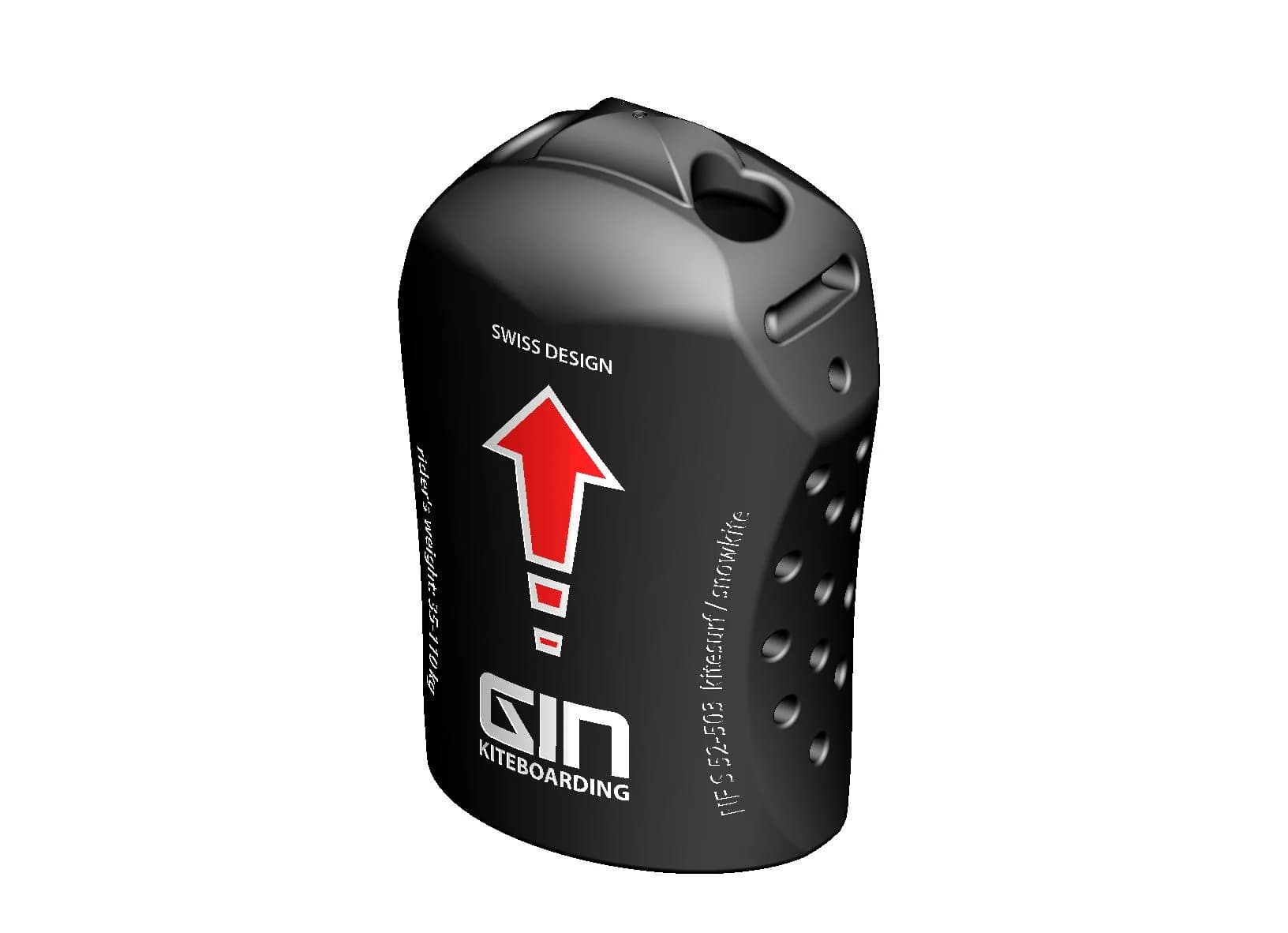
Kitesurf safety systems
Sizing a release mechanism.
For the primary and secondary kitesurf safety releases, activation force was a central development concern. DOMTEKNIKA designed the injection-moulded polymer parts, carried out mechanical and rheological calculations, and studied this force with prototypes.
View projectWhen to involve us
Support design decisions with calculations and clear assumptions.
- Study loads and deformation in a component
- Compare geometries or materials
- Identify critical areas before testing
Our approach
We define load cases from assembly and use: snap-fitting, supports, contacts and transmitted forces. The model accounts for geometry and material; nonlinear analysis is used when the behaviour under study requires it.
Set the assumptions
Define materials, loads and boundary conditions.
Analyse behaviour
Study loaded areas and compare variants.
Guide decisions
Connect results to design changes and physical tests.
What you receive
- Agreed assumptions and calculation cases
- Simulation results and analysis of critical areas
- Geometry or process recommendations
Results are interpreted alongside their assumptions. They guide geometry changes and physical validation; injection studies are covered in our polymer expertise.
We agree the scope, tests and deliverables with you before work begins.
Frequently asked questions.
Explore the full FAQ7 questions
What do you need for an analysis?
Available geometry, proposed materials, loads and operating conditions. Missing assumptions are clarified before calculations begin.
How does simulation complement physical testing?
It helps identify overly fragile designs before manufacturing and can reduce prototype iterations. It also supports comparison of variants and targeted testing. Even a favourable result must be checked against representative physical tests: its validity depends on the assumptions, material and modelled conditions.
Do you perform nonlinear calculations?
Yes, including studies of large deformations. The model is selected according to part behaviour, material data and contacts. For a clip, for example, the study can examine assembly deformation and transmitted forces; results are then compared with relevant physical tests.
Why do boundary conditions matter?
Supports, contacts and loads describe how a component interacts with its surroundings. An unsuitable representation can substantially change the results, even when the geometry appears accurate.
How do you check whether the mesh is suitable?
We examine how results change with element size and distribution. The quantity relevant to the decision should stabilise; highly localised peaks also require a review of geometry and applied conditions.
Can you compare different geometries or materials?
Yes. Variants can be studied under comparable conditions to understand their differences. This guides design while accounting for manufacturing constraints and the tests still needed.
Can simulation estimate a component’s service life?
A fatigue study can estimate the effect of repeated loads when the operating cycles and material data are appropriate for the case. A static calculation alone cannot establish service life; assumptions and the need for physical tests must be considered.
For our first conversation
.Which technical decision do you need to verify?
Share your geometry, proposed materials and load cases. We can define the analysis scope and the results needed to inform your decision.
Discuss your requirements