


US2024326565 (A1)
车门.
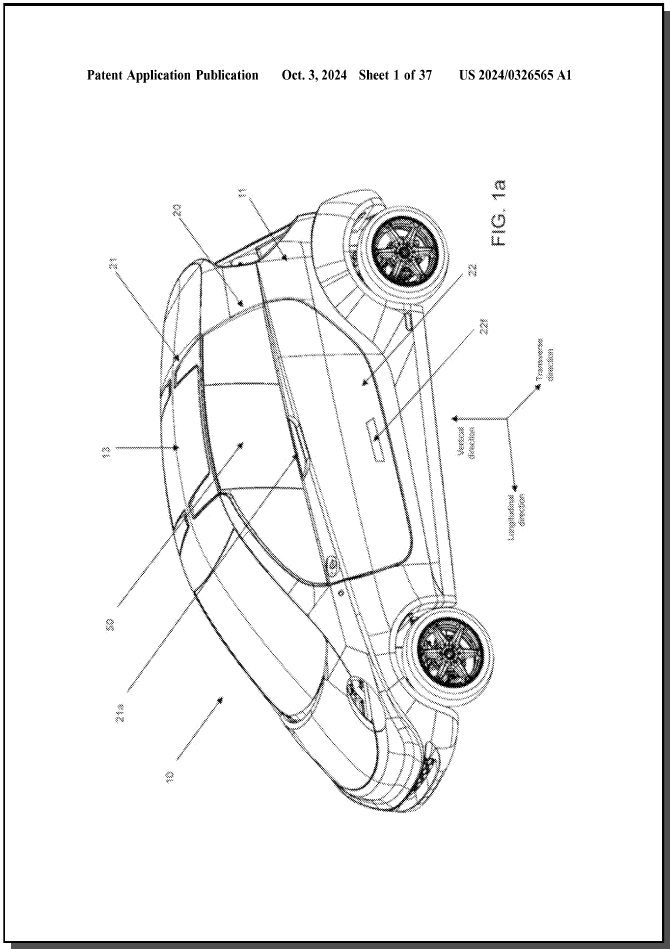
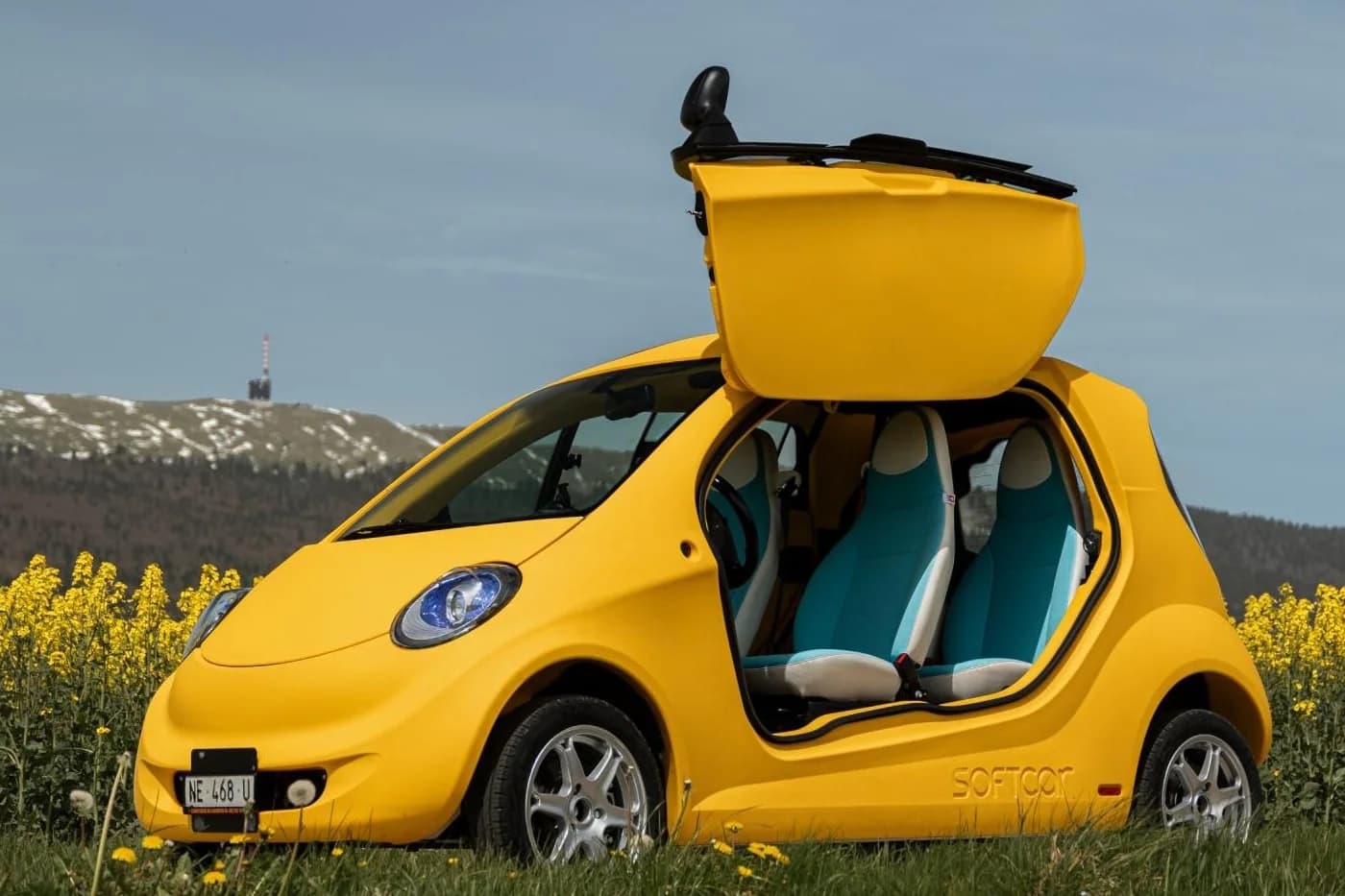
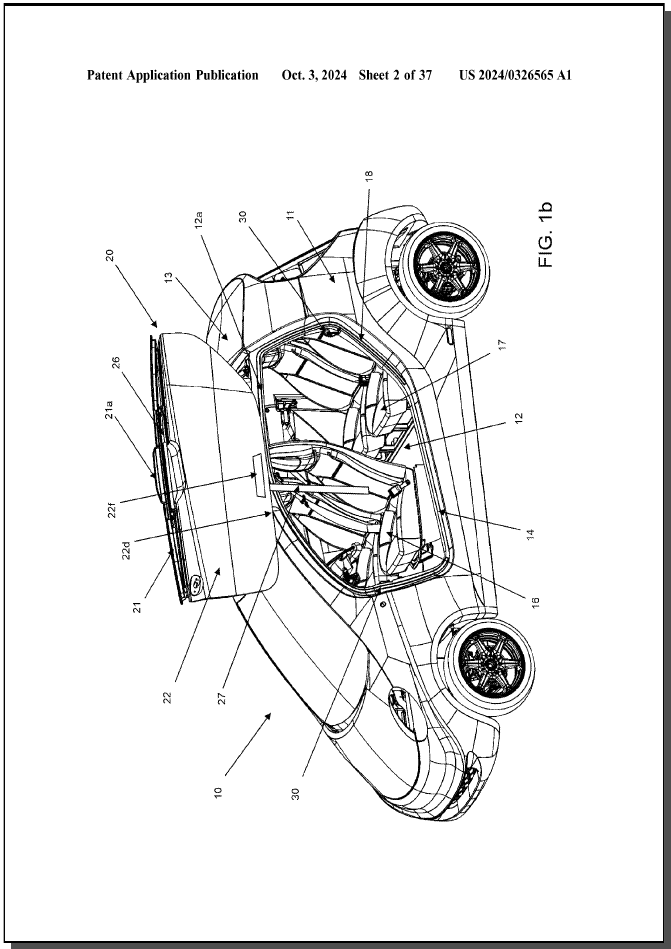
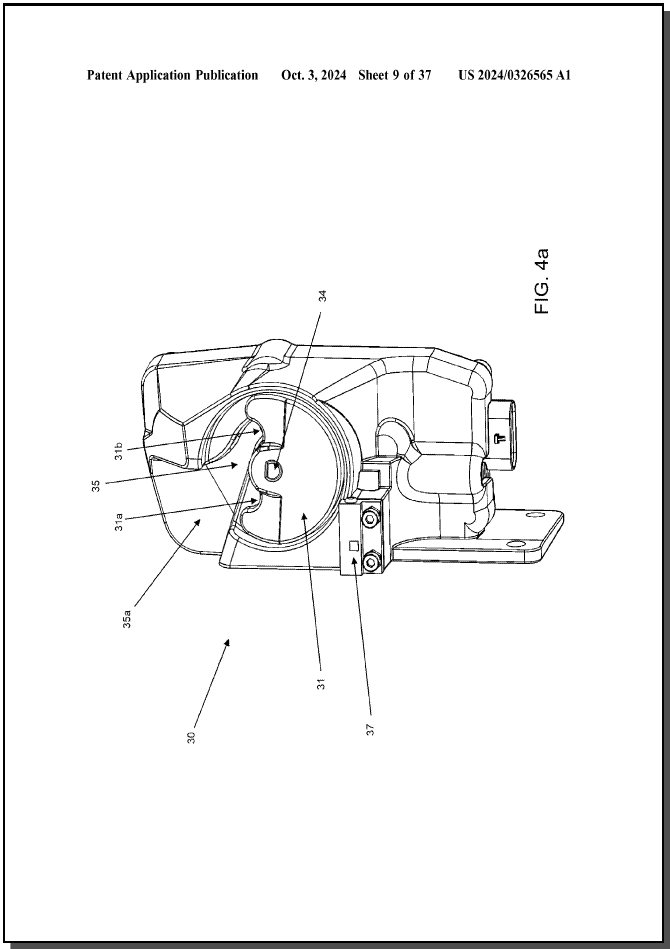
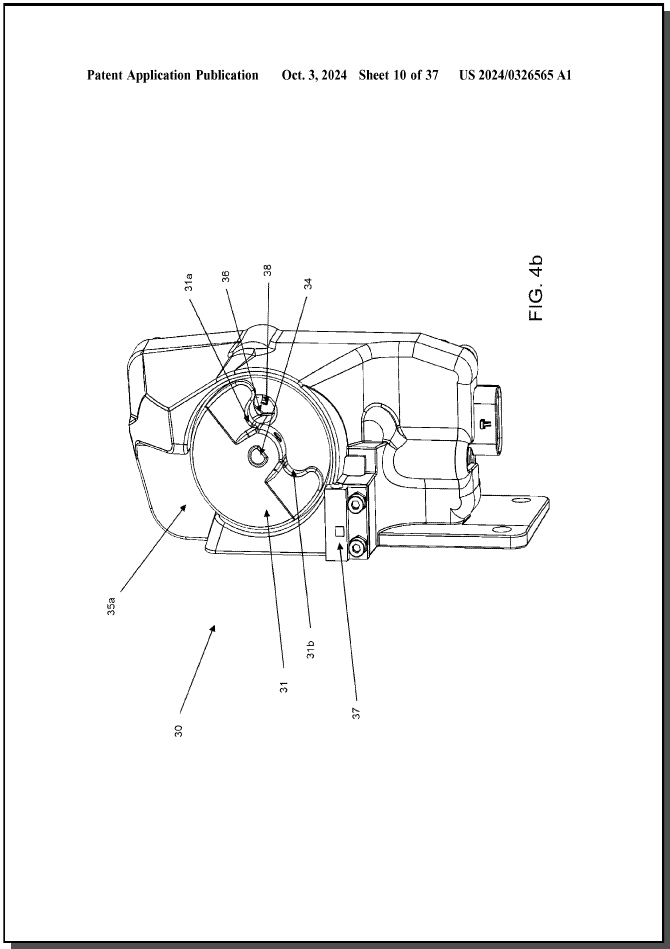
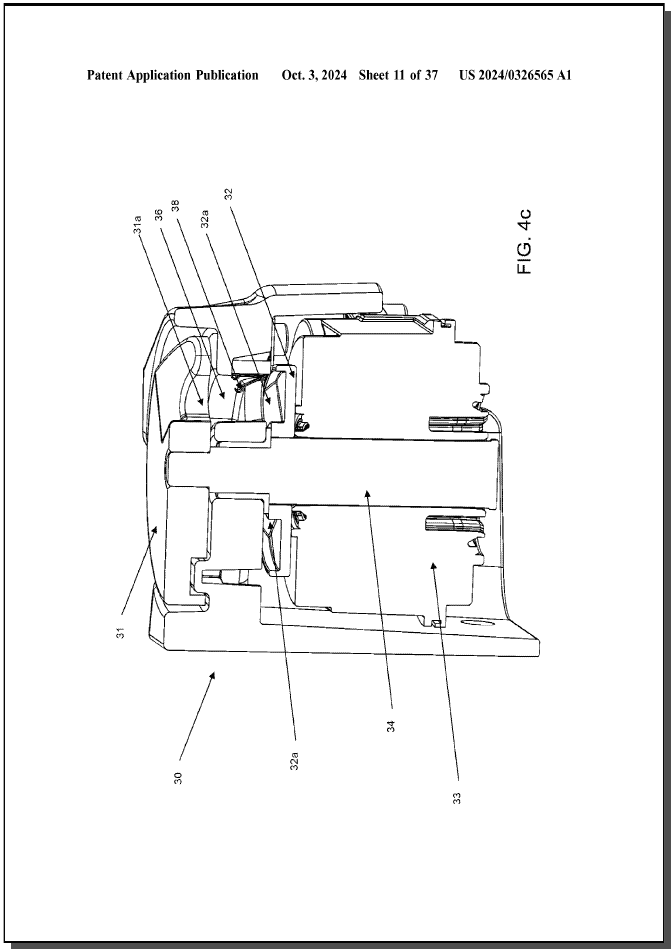
[0000] 本发明涉及一种车辆分段式车门,其开口尽可能靠近所述车体,具有用于关闭、锁定和打开车体的凸轮撞针,具有用于打开车体的致动器,并且具有能够与所述车体分离并沿着所述车门水平平移的活动窗。这些元件被实施在具有复杂几何形状表面的门上,从而提供具有复杂几何形状表面的一体式车身,在侧面具有用于进入前排座椅和后排座椅的单个大开口,以及用于关闭所述开口的单个大门。
- 公开号
- US2024326565 (A1)
- 公开日期
- 2024-10-03
- 优先权日
- 2021-07-05
- 发明人
- HEISEL GUILLAUME [CH]; THULIEZ JEAN-LUC [CH]; GULLI CLARA [CH]; CROZIER ETIENNE [CH]; LANDWERLIN STÉPHANE [CH]
- 申请人
- SOFTCAR SA [CH]
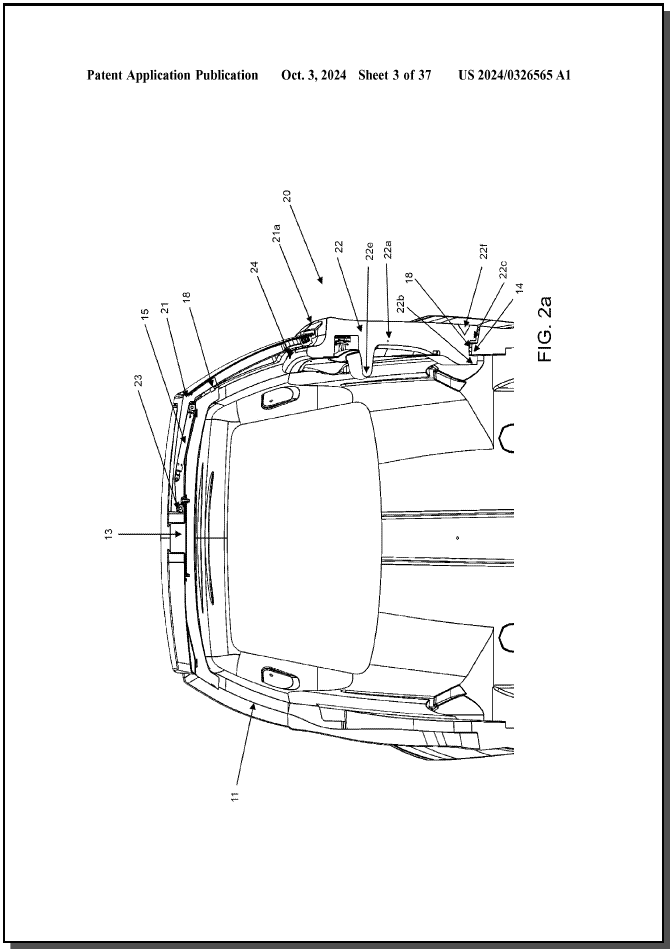
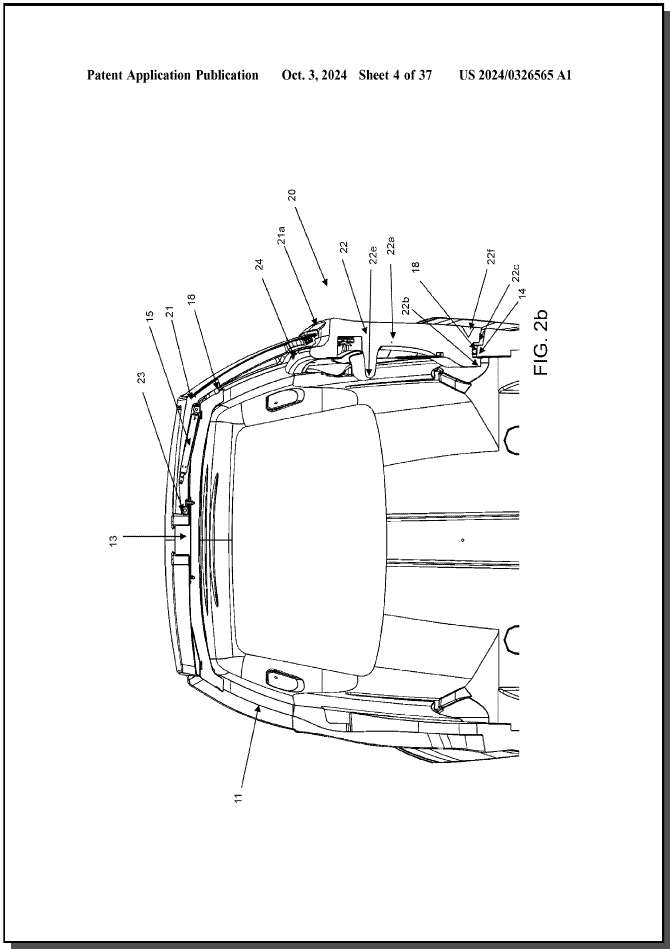
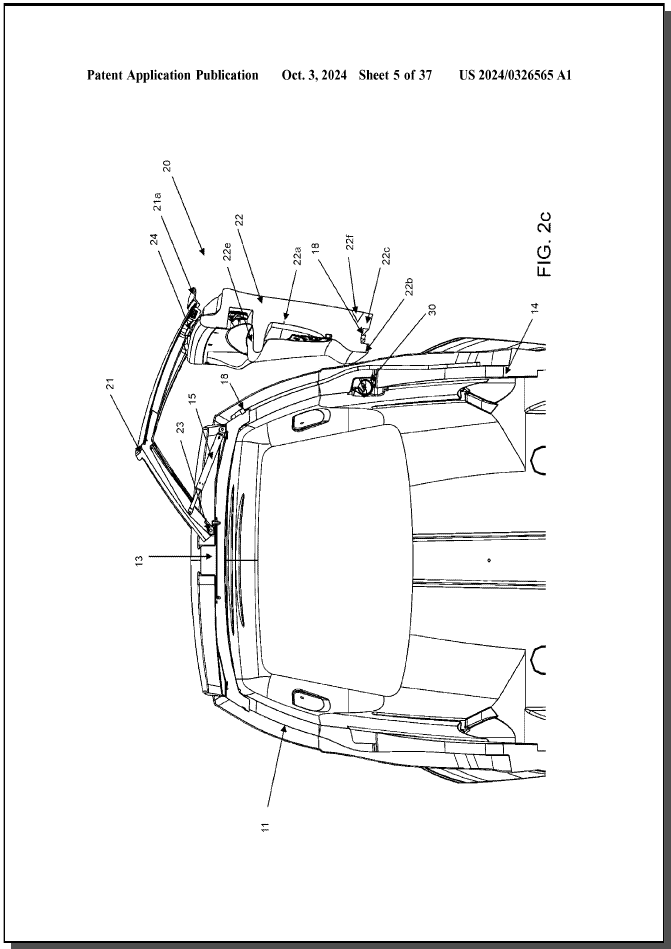
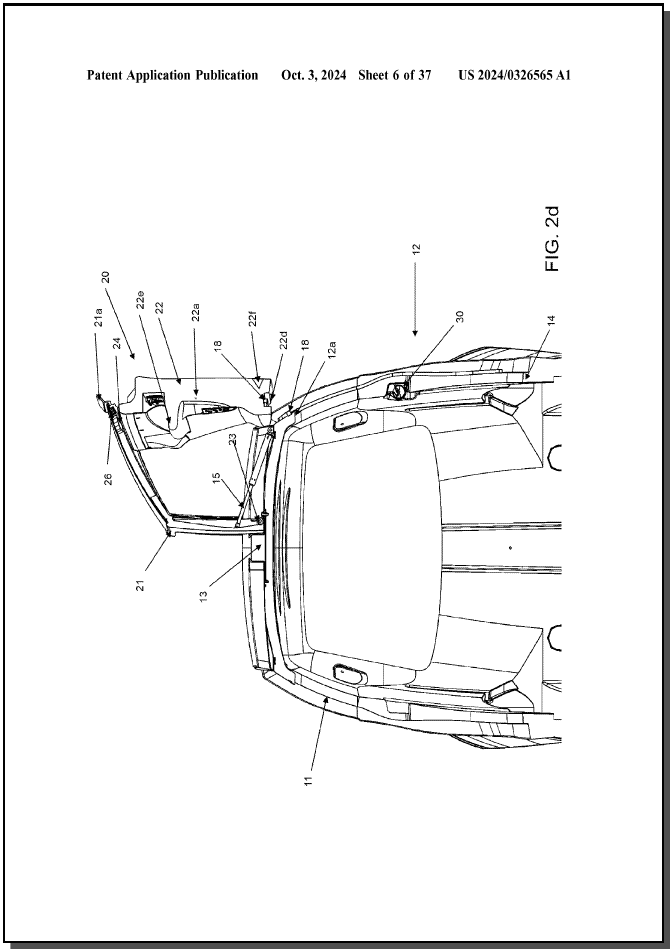
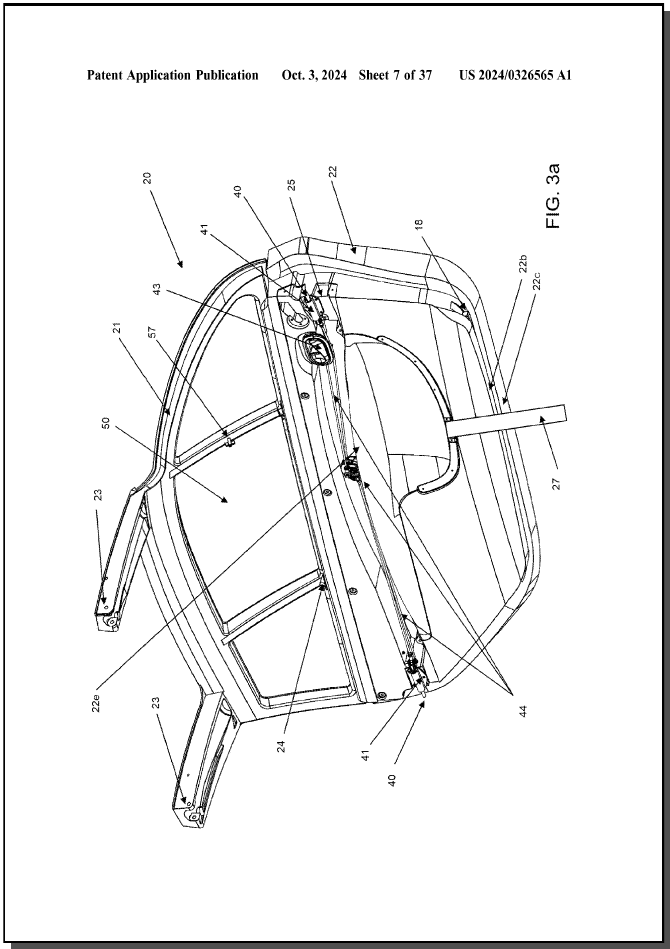
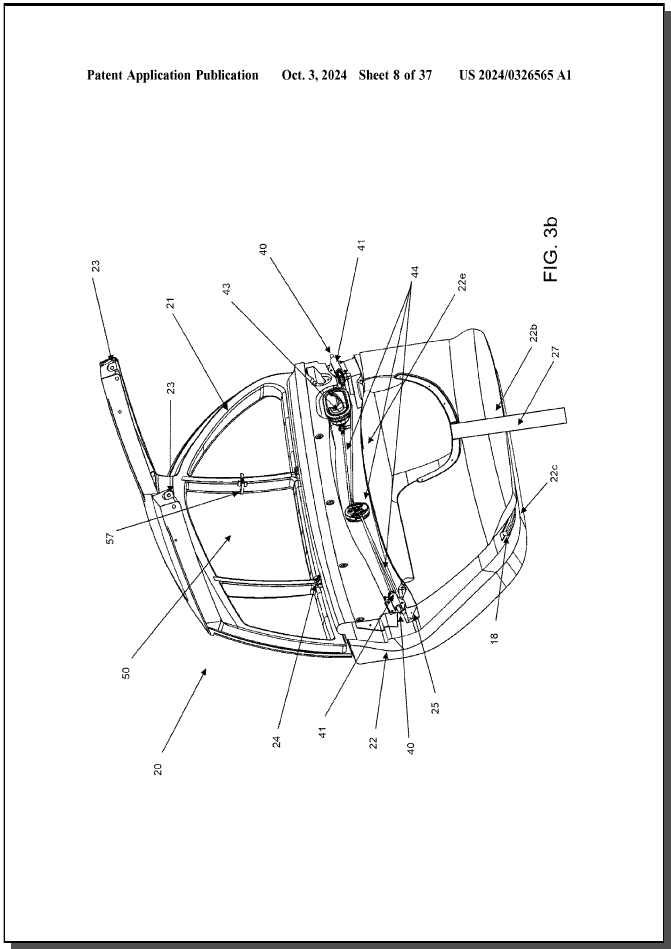
- 分类
- Classification: - internationale B60J5/04; E05B81/06; E05B81/16; E05B83/36; E05B85/04; E05F15/611 - coopérative B60J1/16 (EP); B60J5/0473 (EP, US)
专利族公开文本
相关项目
项目图片
说明
CORRESPONDING APPLICATION
[0001] The present application claims priority over the international application PCT/IB2021/056012 filed on Jul. 5, 2021 in the name of SOFTCAR SA, the content of this prior application being incorporated by reference in its entirety in the present application. TECHNICAL FIELD
[0002] The present application relates to a vehicle door opening as close as possible to the body of said vehicle, means being associated to perform the opening, the closure and the locking thereof automatically and/or manually. Said door is further equipped with a movable window that can be detached from said body and translated along said door. These elements can be implemented on a door having surfaces with complex geometry, thus making it possible to have a one-piece body with significant curvatures, with a single large opening on the side for accessing the front and rear seats, and a single large door for closing said opening. PRIOR ART
[0003] Motor vehicle doors are mostly produced in a single piece pivoting about a vertical axis. Because of this, when they are open, they significantly increase the width of the vehicle, and necessitate having space on the side of the vehicle. Closure is entirely manual and requires the door to be “slammed”, which generates an overpressure in the interior, entailing the implementation of valves allowing the air to escape. In some cases, they have a motorized striker blocking a sliding bolt placed on the opening of the body, which requires electricity to be brought into the interior of the door.
[0004] In addition, the movable windows are placed in the upper part of the door and enter into the interior of the lower part upon opening. This means having to have windows with a regulated surface and doors which remain as a rigid piece.
[0005] Lateral sliding doors are known and require much less space on opening, but they require the presence of rails, which brings with it significant design constraints. Closure is entirely manual and requires the door to be “slammed”, which generates an overpressure in the interior, entailing the implementation of valves allowing the air to escape. In some cases, they have a motorized striker blocking a sliding bolt placed on the opening of the body, which requires electricity to be brought into the interior of the door. Furthermore, the movable windows are placed in the upper part of the door and enter into the interior of the lower part upon opening. That means having to have windows with a regulated surface and doors which remain as a rigid piece.
[0006] Some vehicles are equipped with so-called “butterfly” doors which take up a lot of space laterally upon opening. They have the same features as the preceding doors regarding the closure and the windows.
[0007] There are, finally, winged doors which have the advantage of taking up very little space on opening and of not being “slammed” on closure, but they have a complex kinematic and an anchoring on the bodywork that has to withstand very significant forces.
[0008] In addition to the windows that slide vertically into the interior of the bottom part of the door, there are windows that can pivot about a vertical axis, but they take up space widthwise or have a limited opening.
[0009] There are also counter-type windows mounted on slide rails, but they do not offer freedom of design and rapidly become scratched. SUMMARY OF THE INVENTION
[0010] One aim of the invention is first of all to enhance the known products and systems.
[0011] The present invention makes it possible to mitigate all of the above-mentioned drawbacks. It makes it possible, notably but not exclusively, to produce, for a body having surfaces with complex geometry (such as, for example, surfaces with spherical, toroidal, hybrid or other components, or surfaces with significant radii of curvature), a vehicle door that has a simple kinematic, that can be adapted to any body design, that opens as close as possible to the body, that closes without creating overpressure, that manages the closure and the locking without the addition of electricity in the door, and that makes it possible to have a movable door that opens widely regardless of its geometry and the form of the body. A door according to the invention is therefore on the one hand simple to produce and on the other hand very light.
[0012] This door can thus be installed on a one-piece body or produced in several parts. This body can have on one side two small openings (for example one to access the front seats and one to access the rear seats), or a single large opening making it possible to access all the seats (front and rear) and offering very great accessibility. Based on the number of openings, the body can thus be equipped with one or two doors per side, even more (for example one for each row of seats). The principle of the door according to the present invention is not limited to use on a side door but can be applied to a trunk lid for example.
[0013] The door is sectional, that is to say that it is composed of two kinematic groups. The first group is the top frame which pivots about a top axis, the orientation of which is substantially longitudinal (in the longitudinal direction illustrated in FIG. 1a) placed on the roof of the body. The second group is the bottom door leaf which pivots about a bottom axis, the orientation of which is also substantially longitudinal and placed on the top frame. When the door is closed, the top pivot being significantly further away transversely than vertically from the bottom pivot, the opening or the closure of the door is done along the form of the body, allowing the door to have a travel that exceeds the overall width of said vehicle by a value which is minimal, even zero. This makes it possible not to injure the user when the door is automatically opened. When the door is open, the height of the bottom door leaf is lower than the height of the top frame. Because of this, the bottom door leaf does not obstruct the opening and does not hamper the entering or exiting of the vehicle. There can be several parts for producing these pivots, but these parts are not very far apart longitudinally in order to be able to perform their function even if the body has a significant curvature.
[0014] When the vehicle is on a relatively horizontal surface, the bottom door leaves are positioned by gravity in their final closed position without outside assistance, because of the positioning of their center of gravity. However, for this function to be ensured even when the vehicle is on a slope in the transverse direction (see FIG. 1a), a spring can also be installed between the top frame and the bottom door leaf in order to bring the latter toward the interior of the vehicle.
[0015] The door preferably has three distinct positions: an open position, a semi-closed position, and a closed position. In the open position, the door does not cover the opening of the body, which allows the users to enter or exit the vehicle. In the semi-closed position, the opening of the body is obstructed by the door, but the seal-tightness is not yet produced between the inside and the outside of the interior of the vehicle. In the closed position, the seal-tightness is produced between the inside and the outside, and the door is ready to be locked in position. Between the closed position and the semi-closed position, the top frame preferably pivots by only a few degrees.