


US2016000570 (A1)
Gelenkimplantate auf Polymerbasis und Verfahren zu ihrer Herstellung.
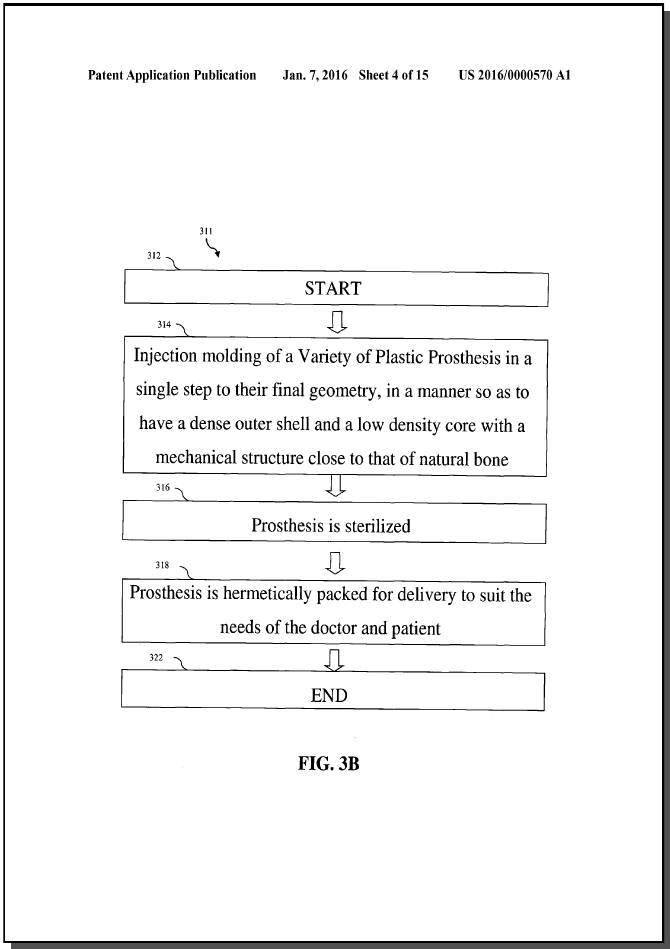
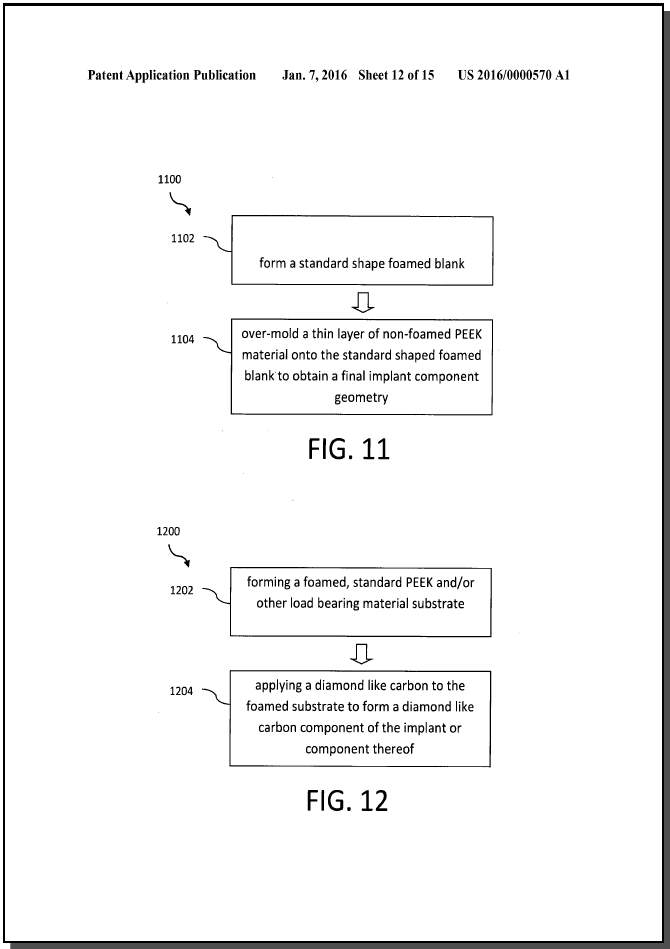
Eine Methode und ein Implantat basierend auf Spritzgusstechniken. Das Verfahren erzeugt für die Implantation geeignete Polymerkomponenten mit einer Struktur und mechanischen Eigenschaften, die denen von natürlichem Knochengewebe ähneln. In einer Variante umfasst das Verfahren zur Herstellung eines Implantats oder einer Komponente davon das Formen eines geschäumten Rohlings in Standardform und das Überformen einer dünnen Schicht aus nicht geschäumtem PEEK-Material auf den geschäumten Rohling in Standardform, um eine endgültige Geometrie der Implantatkomponente zu erhalten, wobei der Rohling vollständig von der überformten Schicht eingekapselt wird.
- Veröffentlichung
- US2016000570 (A1)
- Veröffentlichungsdatum
- 2016-01-07
- Prioritätsdatum
- 2013-03-15
- Erfinder
- THULIEZ JEAN-LUC [CH]; AYLIFFE JOHN NICHOLAS [CH]
- Anmelder
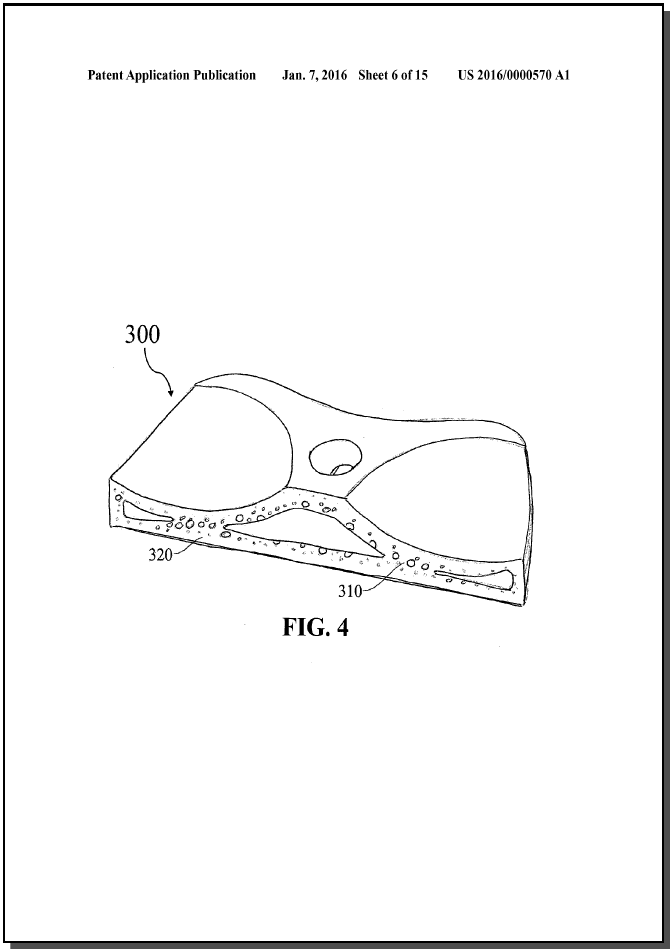
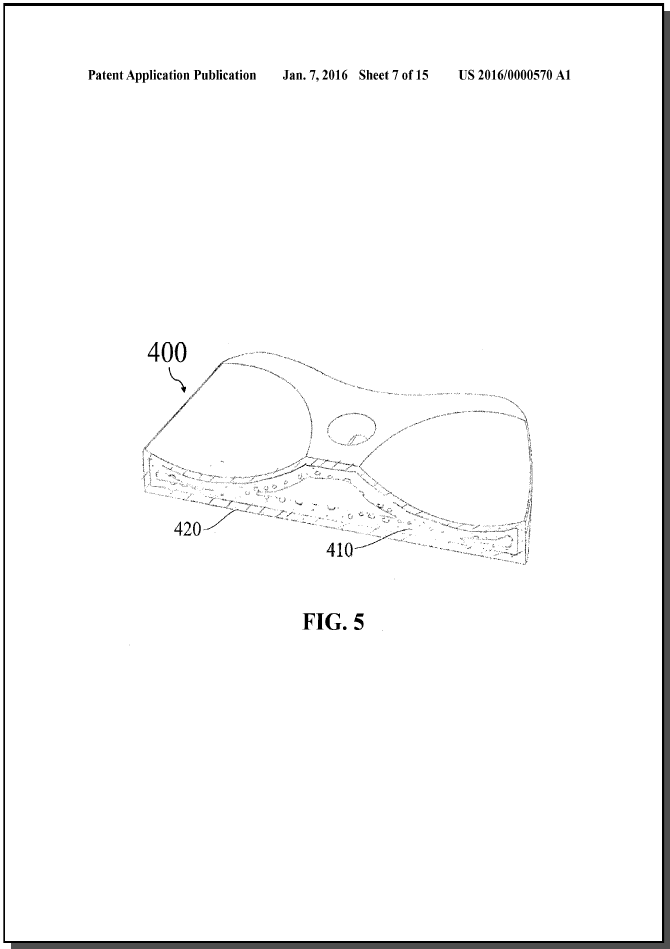
- SWISS IDEA BOX SARL [CH]
- Klassifikation
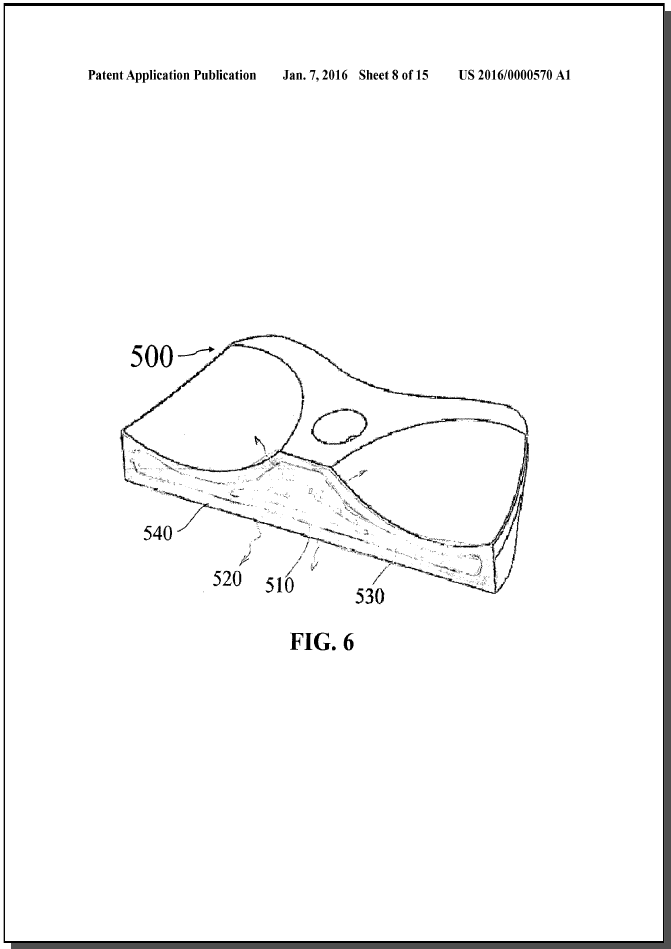
- Classification: - internationale A61F2/30; A61F2/38; A61L27/18; A61L27/30; A61L27/44; A61L27/50; A61L27/54; A61L27/56 - coopérative A61F2/30 (US); A61F2/3094 (EP, US); A61F2/30965 (US); A61F2/38 (EP, US); A61F2/3859 (US); A61F2/389 (US); A61F2002/30011 (EP, US); A61F2002/30016 (US); A61F2002/30624 (US); A61F2002/30971 (US); A61F2002/3863 (US); A61F2310/0058 (EP, US); A61L2300/104 (EP, US); A61L2430/24 (EP, US); A61L27/18 (EP, US); A61L27/303 (EP, US); A61L27/443 (EP, US); A61L27/50 (EP, US); A61L27/54 (EP, US); A61L27/56 (US);
Patentfamilie
Projektbilder
Beschreibung
CROSS REFERENCE TO RELATED APPLICATIONS
[0001] This application claims the benefit of U.S. Provisional Application No. 61/787,270, filed 15 Mar. 2013, entitled: “POLYMER BASED IMPLANTS AND METHOD OF MANUFACTURE”, the contents of which are incorporated herein by reference thereto. COPYRIGHT & LEGAL NOTICE
[0002] A portion of the disclosure of this patent document contains material which is subject to copyright protection. The Applicant has no objection to the facsimile reproduction by anyone of the patent document or the patent disclosure as it appears in the Patent and Trademark Office patent file or records, but otherwise reserves all copyright rights whatsoever. Further, no references to third party patents or articles made herein is to be construed as an admission that the present invention is not entitled to antedate such material by virtue of prior invention. FIELD OF THE INVENTION
[0003] This invention relates to an economical method of creating medical implants with a mechanical structure resembling that of natural bone, and to the medical implants themselves, and in particular load bearing joint implants. BACKGROUND OF THE INVENTION
[0004] Presently, implants are usually machined from materials in bulk form, obtained for example from extruded rods or sheets. They may consist of polyethylene (UHMWPe), ceramic or metal alloys such as cobalt-chrome or stainless steel. Material waste is therefore high and may result in excessive costs.
[0005] The surfaces of bearings in hip, knee and shoulder implants generally fall into one of the following categories: (1) polyethylene on metal, (2) polyethylene on ceramic, (3) ceramic on ceramic, (4) ceramic on metal, or (5) metal on metal bearings.
[0006] Ceramic has the advantage of a very low friction coefficient. It is, however, heavy, relatively expensive and prone to fracture upon impact. In addition, geometric restrictions exist for this family of materials.
[0007] Metal alloys, when used in conjunction with polyethylene or ceramic, do function well, but concerns exist about polyethylene wear with a metal alloy counterpart due to the relatively high friction coefficient of this pairing.
[0008] Metal on metal bearings are currently causing great concern due to feared release of metal ions. Friction coefficients are relatively high and therefore require post-machining to a level of “super-finishing”.
[0009] The greatest long-term impact on implant survival is, however, due to polyethylene wear. The literature seems to suggest that the biggest cause of long-term implant loosening and ultimately implant failure is polyethylene wear. When polyethylene debris is released into the joint capsule either due to friction wear or monomer particle release, giant cells called macrophages form around the debris, as the body is not capable of absorbing polyethylene debris. As more macrophages form, the implant can become unstable and fail.
[0010] Polyaryl-ether-ether-ketone aka Polyether Ether Ketone Compound (PEEK) is a material renowned for its stability and strength (see for example S. M. Kurtz et al., Biomaterials 28 (32), pp. 4845-4869 (2007), the entire disclosure of which is hereby incorporated by reference). It has one of the lowest friction coefficients when paired with metal alloys. The present 3-phase manufacturing process of polymer synthesis in powder form, granulation in the form of beads, and extrusion into rods or sheets, followed by machining into the required shape, leads, however, to very high costs. PEEK has therefore only been used sparingly in the past.
[0011] What is needed is a method of bypassing the costly process of manufacturing for example PEEK implants from bulk material. There is furthermore a need to create implants with a mechanical structure close to that of natural bone. The invention described below solves many of the problems in the art. SUMMARY OF THE INVENTION
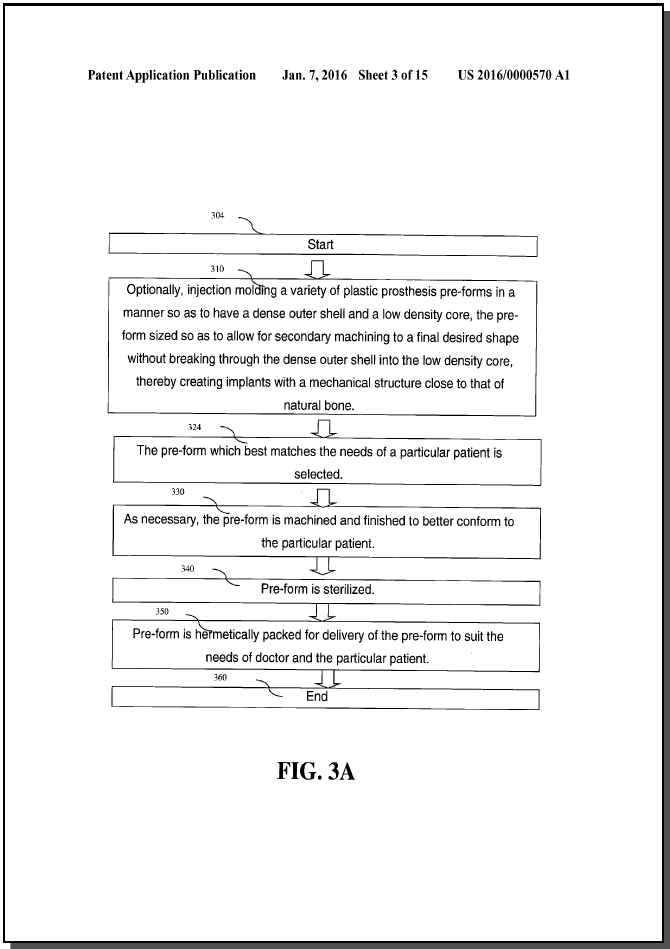
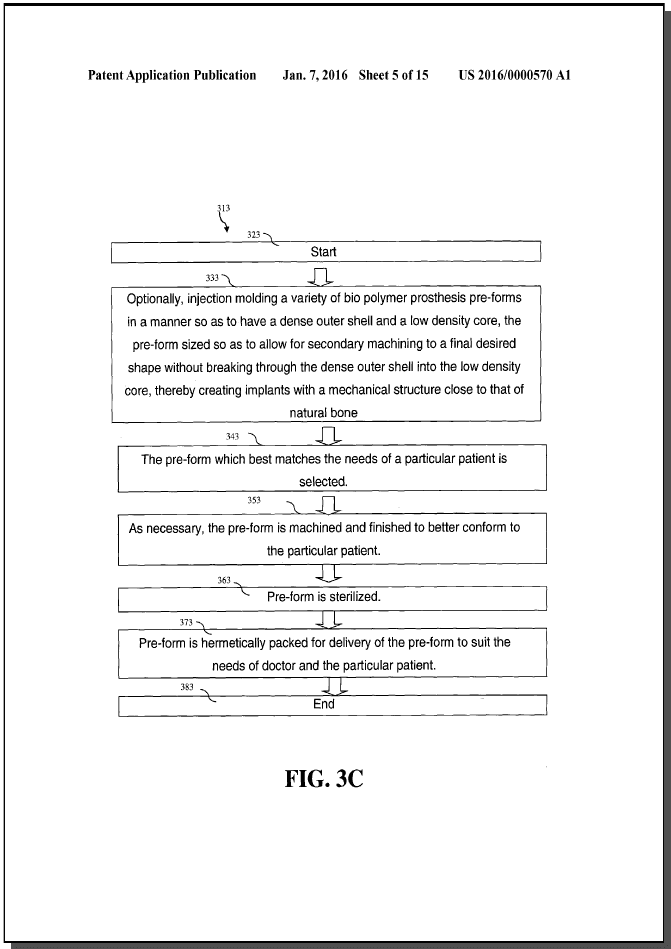
[0012] The invention provides a method of processing an implant order which creates a custom implant including several steps. In a first optional step, a variety of polymer or reinforced polymer prosthesis pre-forms are injected in a manner so as to have a dense outer shell resembling cortical bone and a low density core resembling cancellous bone, the pre-form sized so as to allow for secondary machining to a final desired shape without breaking through the dense outer shell into the low density core, the pre-forms thereby having a structure close to that of natural bone and a geometry suited to the needs of a class of patients creating implants with a hollow mechanical structure close to that of natural bone. In a second step, the pre-form which best matches the needs of a particular patient is selected. In a third step, as necessary, the pre-form is machined and to finished to better conform to the particular patient. In a fourth step, the pre-form is sterilized. In a fifth step, the pre-form is hermetically packed for delivery of the pre-form to suit the needs of doctor and the particular patient.
[0013] In one embodiment of the invention, the plastic is PEEK. In another embodiment, the plastic is “VESTAKEEP”® plastic, available from Evonik Degussa GmbH of Marl, Germany.
[0014] It is an object of the invention to produce a variable density, and optionally a hollow (in center) core device which closely replicates the natural bone structure and natural mechanical performances.
[0015] It is another object of the invention to produce a flexible device, the elasticity of which is governed by its geometry.
Ansprüche
- 1. A method of processing an implant order, the method comprising the steps of: a. producing a variety of prosthesis pre-forms having a dense outer shell resembling cortical bone and a low density core or hollow centre resembling cancellous hone, the pre-form sized so as to allow for optional secondary machining to a final desired shape without breaking through the dense outer shell into the low density core, the pre-forms thereby having a structure close to that of natural bone and a geometry suited to the needs of a class of patients;b. selecting the pre-form which best matches the needs of a particular patient or class of patients;c. as necessary, machining and finishing the pre-form to better conform to the particular patient or class of patients;d. sterilizing the pre-form; ande. packaging the sterilized pre-form for delivery of the preform to suit the needs of doctor and the particular patient or class of patients.
- 2. The method of claim 1, wherein the pre-form is formed of plastic material.
- 3. The method of claim 2, wherein the method comprises adding barium sulphate to the pre-form.
- 4. The method of claim 1, wherein the pre-form is formed of PEEK® plastic.
- 5. The method of claim 1, wherein the pre-form has a desired flexibility for the same external geometry.
- 6. The method of claim 1, wherein the pre-form has a desired density for the same external geometry.
- 7. The method of claim 1, wherein the pre-form has a desired stiffness for the same external geometry.
- 8. The method of claim 1, wherein the pre-form is formed to have a highly crystallised surface thereby allowing significant reductions in friction coefficient with a paired material.
- 9. The method of claim 1, wherein the pre-form is formed to minimize material use while maintaining required characteristics.
- 10. The method of claim 1, wherein an anti--infection agent is injected within the pre-form.
- 11. The method of claim 1, wherein the anti-infection agents comprise silver ions.
- 12. A pre-form prosthesis having a dense outer shell and a low density core, the pre-form sized so as to allow for secondary machining to a final desired shape without breaking through the dense outer shell, the pre-forms having a structure close to that of natural bone and a geometry suited to the needs of a class of patients.
- 13. The pre-form of claim 12, wherein the pre-form has an external configuration suitable for a first class of patients and an outer shell having a thickness so as to extend to a depth into the outer shell at which a suitable external surface can be formed by secondary machining while leaving a wall thickness allowing a prosthesis machined from the pre-form to suit a second class of patients.
- 14. The pre-form of claim 13, wherein the first class is a largest size class of patients and the second class is a smallest size class of patients, thereby allowing a single pre-form to suit anticipated needs of most patients.
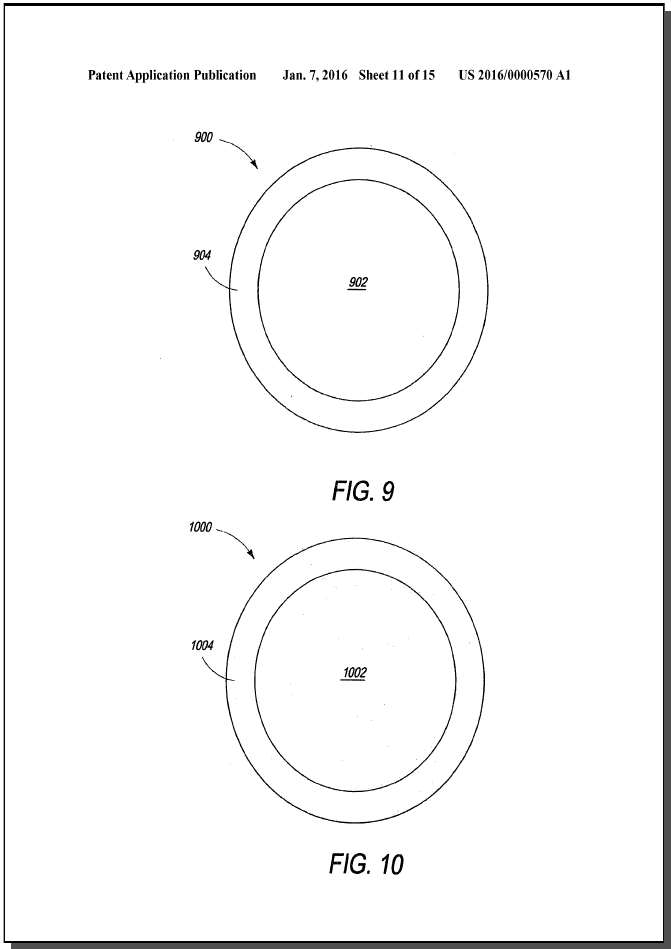
- 15. A joint implant comprising: a foamed inner core joint implant blank, and an over-molded, non-foamed PEEK layer surrounding the foamed inner core blank providing a final implant component geometry.
- 16. A joint implant of claim 15, further comprising: a PEEK joint implant substrate, and a diamond like carbon outer layer, the diamond like carbon outer layer positioned to provide as hearing surface and, the foamed PEEK substrate being inward of the carbon outer layer, and the diamond like carbon outer layer covering some or all of the substrate.
- 17. The implant of claim 16, in which the diamond like carbon outer layer substantially completely encapsulates the substrate.
- 18. The implant of claim 16, in which the PEEK substrate is reinforced with carbon and/or carbon fibers.
- 19. A The method of claim 1, wherein the prosthesis preforms are made using application algorithms for forming a standard shape foamed joint implant blank, and over--molding a thin layer of non-foamed PEEK material onto the standard shaped foamed blank to obtain a final implant component geometry, whereby the blank is at least partially encapsulated by the over-molded thin layer.
- 20. The method of claim 19 further comprising adding barium sulphate to the implant or component thereof.
- 21. (canceled)
- 22. (canceled)
- 23. (canceled)
- 24. (canceled)
- 25. (canceled)
- 26. (canceled)
- 27. (canceled)
- 28.
- 28.
- 29. (canceled)
- 30. A method for creating a plurality of joint implants using a system operated by operating software, the method comprising: a) creating a substantially hollow core,b) surrounding the substantially hollow core with an outer layer mimicking the density of an exterior of a naturally occurring bone, andc) surrounding the substantially hollow core with an inner layer, the inner layer disposed beneath the outer layer and above the substantially hollow core, in which the inner layer is less dense than the outer layer, and in which the inner layer optionally mimicking the bone density of an interior portion of the naturally occurring bone.
- 31. (canceled)