


US2023164492 (A1)
Induktionslautsprecher mit doppeltem axialem Magnetfluss.
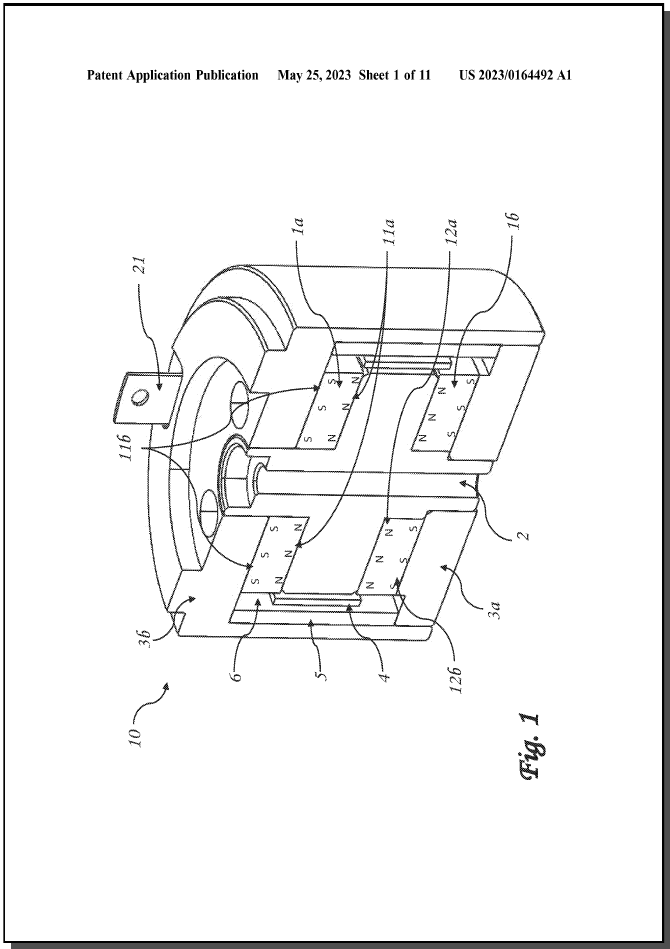
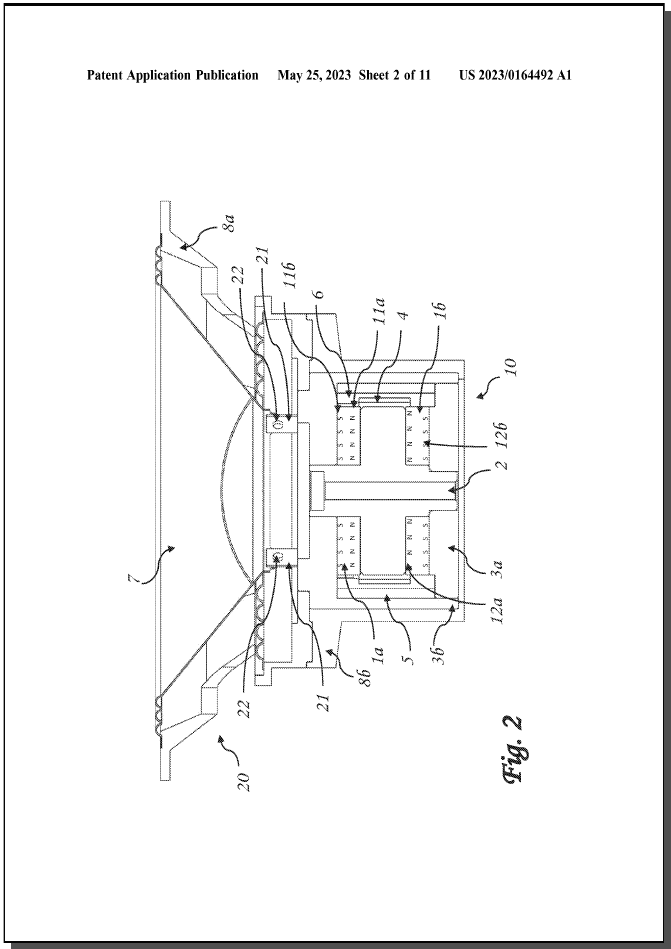
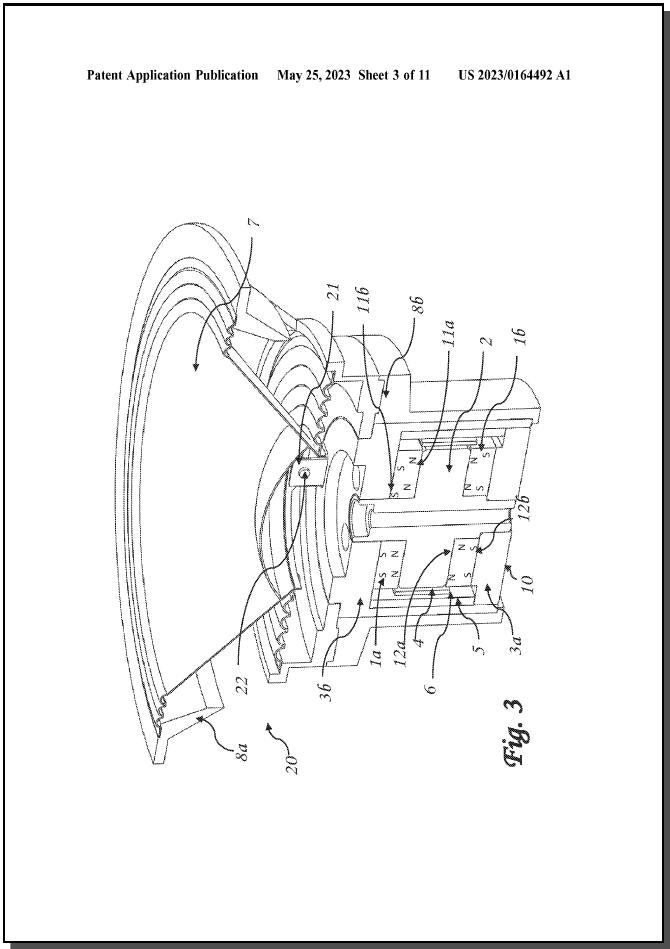
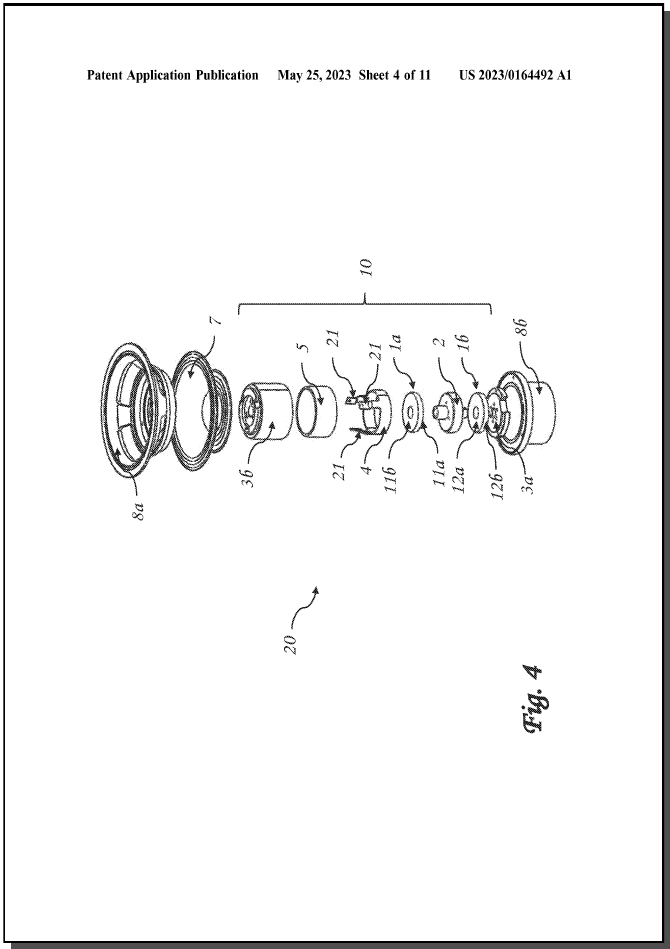
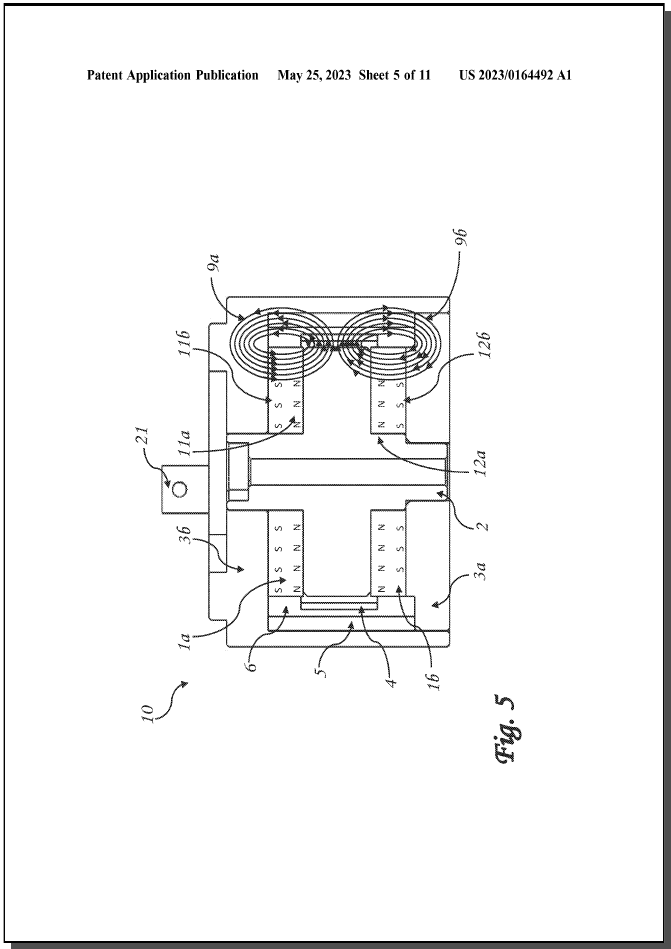
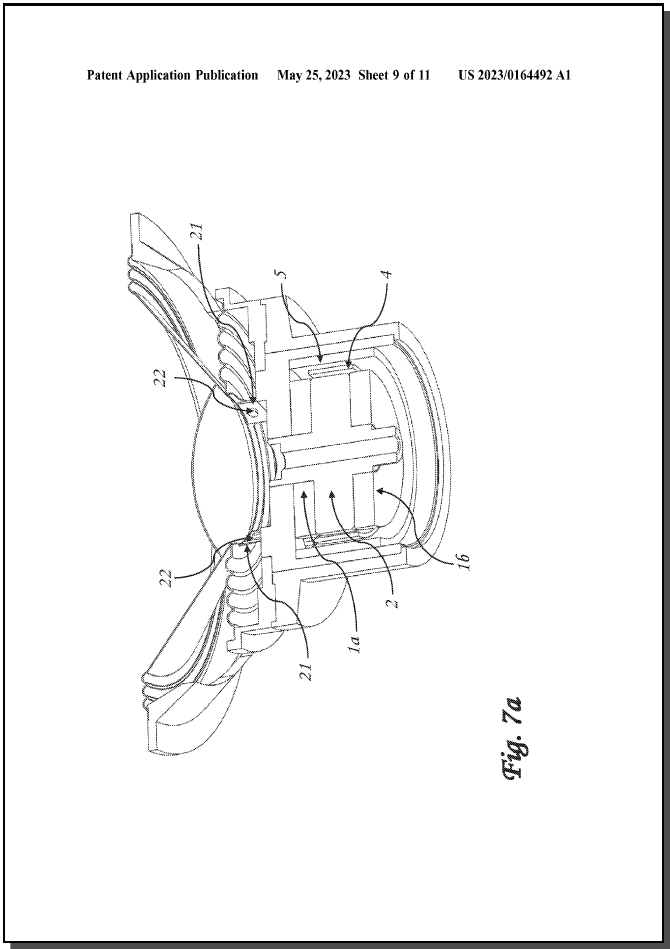
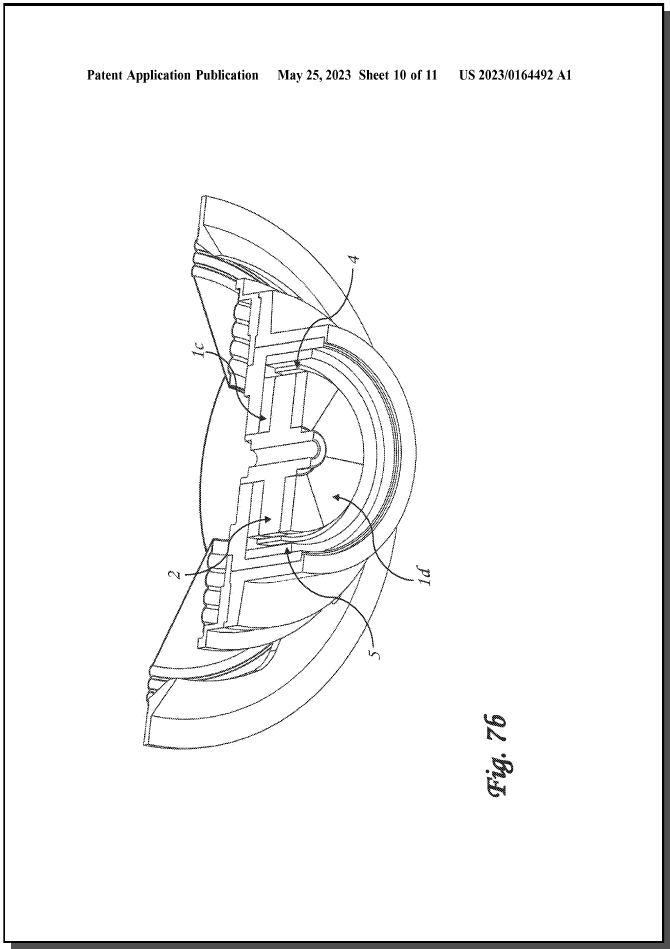
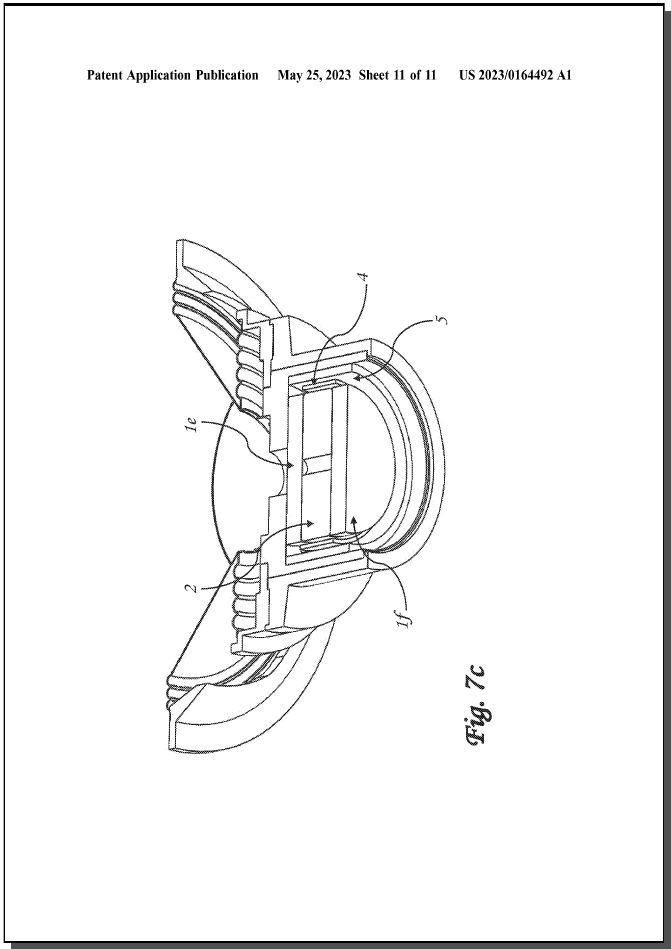
[0000] Die vorliegende Erfindung betrifft das Funktionsprinzip eines Lautsprechers (20) mit einem Induktionsmotor (10). Der Motor (10) verfügt über zwei Magnete (1a und 1b), die auf beiden Seiten eines zentralen Kerns (2) positioniert sind. Die Magnete (1a und 1b) erzeugen somit zwei Magnetfelder (9a und 9b), die das im beweglichen Anker (4) erfasste Magnetfeld verdoppeln. Das mit dem von einer festen Spule (5) erzeugten elektrischen Feld gekoppelte Magnetfeld erzeugt eine Kraft im Anker (4), der mit der Membran (7) verbunden ist und den Ton erzeugt. Durch die Erhöhung des Magnetfelds und damit der im Anker (4) erzeugten Kraft wird somit auch die Leistung des Lautsprechers (20) verbessert.
- Veröffentlichung
- US2023164492 (A1)
- Veröffentlichungsdatum
- 2023-05-25
- Prioritätsdatum
- 2020-04-08
- Erfinder
- HEISEL GUILLAUME [CH]; THULIEZ JEAN-LUC [CH]; QUERRY HECTOR [CH]; ZIMMERMANN ROBIN [CH]; CROZIER ETIENNE [CH]; HOFFET ADRIEN [CH]
- Anmelder
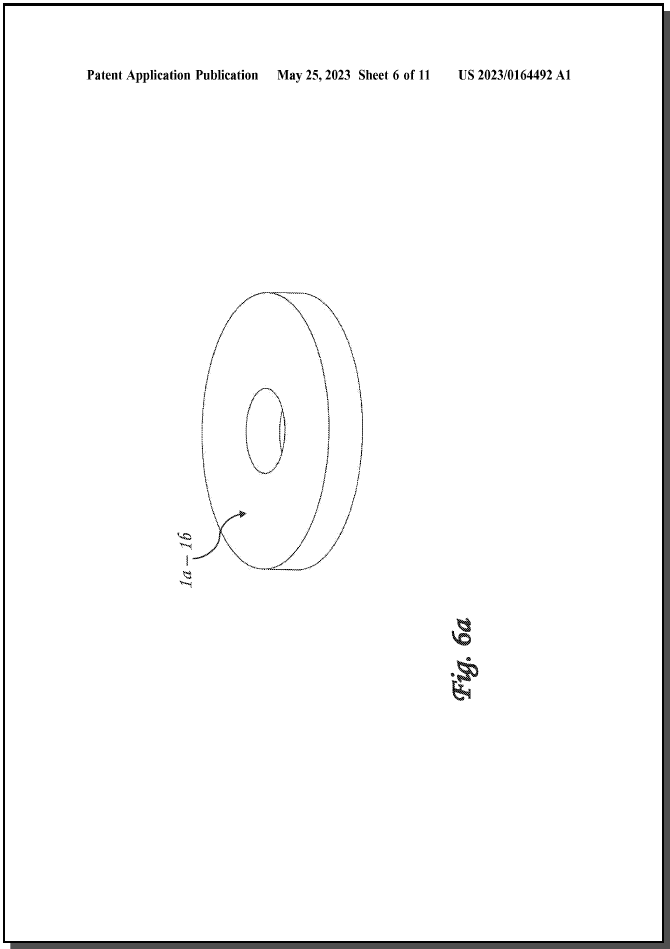
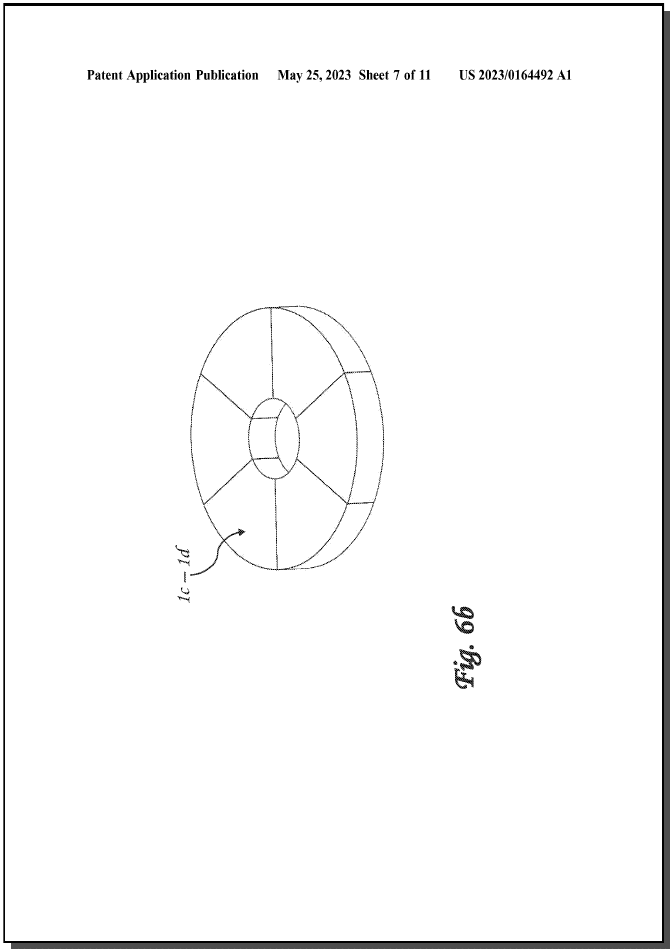
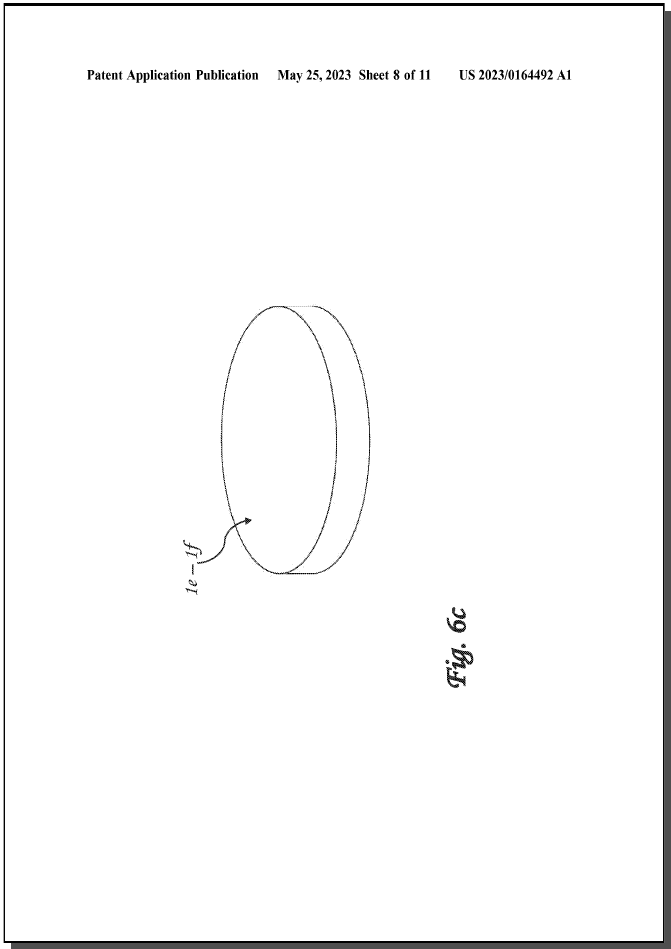
- OLTRAMARE MICHEL [CH]
- Klassifikation
- Classification: - internationale H02K33/16; H04R9/02; H04R9/06 - coopérative H02K33/00 (EP); H02K33/16 (EP, US); H04R2209/043 (EP, US); H04R9/025 (EP, US); H04R9/06 (EP, US);
Patentfamilie
Projektbilder
Beschreibung
CORRESPONDING APPLICATION
[0001] The present application claims the priority of the prior Swiss national application No CH 00425/20 filed on the 8th April 2020 in the name of Michel OLTRAMARE, the content of this prior application being incorporated by reference in its entirety into the present application. TECHNICAL FIELD
[0002] The present invention relates to induction motor devices comprising at least one fixed coil, one mobile armature and magnets. Such a device may for example form an induction loudspeaker.
[0003] More precisely, the present invention relates to the means for driving the movement of the diaphragm of an induction loudspeaker. PRIOR ART
[0004] The diaphragms of loudspeakers working in the low and medium frequencies are generally caused to move by an actuator or motor. There are mainly two types of actuators for loudspeakers: the actuators the most often used, with a mobile coil connected to the diaphragm, referred to as “voicecoil”, and induction actuators, with fixed coil and magnets, and a mobile armature fixed to the diaphragm.
[0005] Numerous patents relate to the composition of induction motors with a fixed coil: U.S. Pat. No. 2,621,261A, 4,965,839A, 5,062,140A, 5,742,696A, 6,359,996B1, 6,542,617B1 and also 8,009,857B2. These patents all mention radial magnetic flux actuators, with magnets placed all around a central core.
[0006] Other patents mention audio systems comprising two magnets and creating an axial magnetic flux: CN105491491A, CN109195077A, KR20140091365A, KR20180085393A, US2010054501A1, US2015271605A1, US2018206040A1, WO2013013502A1, WO2017028034A1. However, none of these inventions has adapted this system of axial magnetic flux to an induction system.
[0007] On conventional induction loudspeakers, as described in the patent U.S. Pat. No. 8,009,857B2, the magnets are placed radially inside or outside of a magnetic air space where the armature is moving. Thus configured, the magnets create a single magnetic field present over the whole circumference of the actuator. Since the magnetic field is generated by the magnets, a good quality of magnet is preferable. However, the higher the strength of the magnet, the lower is its Curie temperature, in other words the temperature at which it is demagnetized. However, the temperature in the core of a loudspeaker tends to rise rapidly. Although some patents provide solutions for cooling loudspeakers: GB1348535A, JPH03239099A, JPS5586288A, JPS56161798A, JPS59216394A or else the application PCT/IB2020/050963 filed on the 6 Feb. 2020 in the name of M. Michel OLTRAMARE, it is necessary to reach a compromise on the power of the magnet depending on the maximum temperature of its environment.
[0008] The magnetic field coupled to a variable electric field (supplied by the coil) creates a force in the armature, thus causing it to move, just like the diaphragm. The greater this force, the faster the armature moves, thus increasing the sensitivity of the loudspeaker.
[0009] Since the force for movement of the armature, and hence the sensitivity of the loudspeaker, is linked to the magnetic field, itself linked to the composition of the magnet, the physical limit is quickly reached. DESCRIPTION OF THE INVENTION
[0010] The aim of the present invention is to improve the known systems, notably but not exclusively, loudspeakers.
[0011] The present invention allows the aforementioned drawbacks linked to the magnetic field to be overcome and provides a dual axial magnetic flux induction system.
[0012] For this purpose, the device such as a loudspeaker, such as defined in the introduction, is notably characterized in that it comprises a motor comprising two sources of magnetic fields, placed axially on either side of a central core. These magnetic field sources may be permanent ring magnets, or other shapes of bipolar permanent magnets such as disks or ring sections. Their poles are axially aligned with the core, but their polarities are opposing. The magnetic fields generated by these magnets are guided by the central core on the one hand and, on the other hand, by one or more members having a good magnetic conductivity and which close the magnetic circuit. Between the assembly comprising the core and the two magnets, and all of the members closing the magnetic field, is located an armature, attached to the diaphragm of the loudspeaker, and a fixed coil, supplied with AC current at a variable frequency creating a variable magnetic field. This magnetic field creates Foucault currents in the armature. These Foucault currents associated with the magnetic field generated by the magnets apply a force on the armature which is then moved with the diaphragm, which produces a sound wave.
[0013] By being so positioned, each magnet will create its own magnetic field. In this way, the total magnetic field generated in the loudspeaker is doubled in the armature compared with a conventional induction loudspeaker. This double magnetic field increases the force generated on the armature, and thus improves the sensitivity of the loudspeaker.
[0014] By doubling the magnets, the intensity of the magnetic field is increased without modifying the composition of the magnet, and without having to increase the current in the coil. If the current in the coil remains the same, the temperature within the motor does not change. If the composition of the magnet remains the same, the Curie temperature does not change, and the maximum temperature allowed inside of the loudspeaker also remains identical.
[0015] A compromise between the operating temperature of the loudspeaker and the quality of the magnets is thus avoided.
Ansprüche
- 1. An induction motor device comprising a fixed coil, a mobile armature within a magnetic space, a central core, wherein it comprises at least two magnetic sources disposed axially on either side of the central core.
- 2. The induction motor device as claimed in claim 1, wherein the magnetic sources are opposing, thus creating two distinct magnetic fields.
- 3. The induction motor device as claimed in claim 1, wherein at least one of the magnetic sources comprises one or more bipolar permanent ring magnets.
- 4. The induction motor device as claimed in claim 1, wherein at least one of the magnetic sources comprises one or more disk-shaped bipolar permanent magnets.
- 5. The induction motor device as claimed in claim 1, wherein at least one of the magnetic sources comprises one or more bipolar permanent magnets taking the form of ring sections.
- 6. A loudspeaker comprising at least one device as claimed in claim
- 1.
- 7. The loudspeaker as claimed in claim 1, said loudspeaker comprising at least one diaphragm linked to the armature and caused to move by the armature.
- 8. The loudspeaker as claimed in claim 6, said loudspeaker comprising a salad bowl to which the diaphragm is fixed and a housing fixing the induction motor device to the salad bowl.